
Affiliate Disclosure: This post contains affiliate links, which means I may earn a commission if you make a purchase through links on this site, at no extra cost to you. As an Amazon Associate I earn from qualifying purchases.
The Intelligent Change Productivity Planner is an undated A5 planner that teaches you a prioritization system before it hands you a single blank line. I would buy it again. The quarterly rocks framework and the Focus Time pages do the work most planners leave to you, and the linen hardcover holds up in a bag. Skip it if you need appointment slots or room to mix personal and work tasks on one page.
This was sent to me to try out, and I went in expecting a nice-looking notebook with a few prompts. That is not what this is. The guided framework inside is thorough enough that I looked at it and thought, I actually need this.
I was going to pass it along to someone as a gift. I kept it. That should tell you something right at the top.
Quick Verdict
- Buy it if: you want a structured, guided planning system that teaches you how to prioritize, not just gives you blank lines to fill in
- Skip it if: you need a full daily calendar with appointment slots and room for personal tasks alongside work to-dos
- My favorite feature: The framework content blew me away. There are actual instructions on how to think about your quarter, including Tim Ferriss’s productivity approach and the rocks, pebbles, and sand prioritization system.
- Would I buy again? Yes
How is this different from a standard planner?
Most planners hand you empty boxes and assume you know what to do with them. This one opens with a full orientation. You get pages explaining the quarterly rocks system, how to set goals that actually move the needle, and a breakdown of the Focus Time technique before you write a single task.
That setup section changes how you use the rest of it. By the time you get to the daily pages, you have a framework in your head, not just blank space staring back at you.
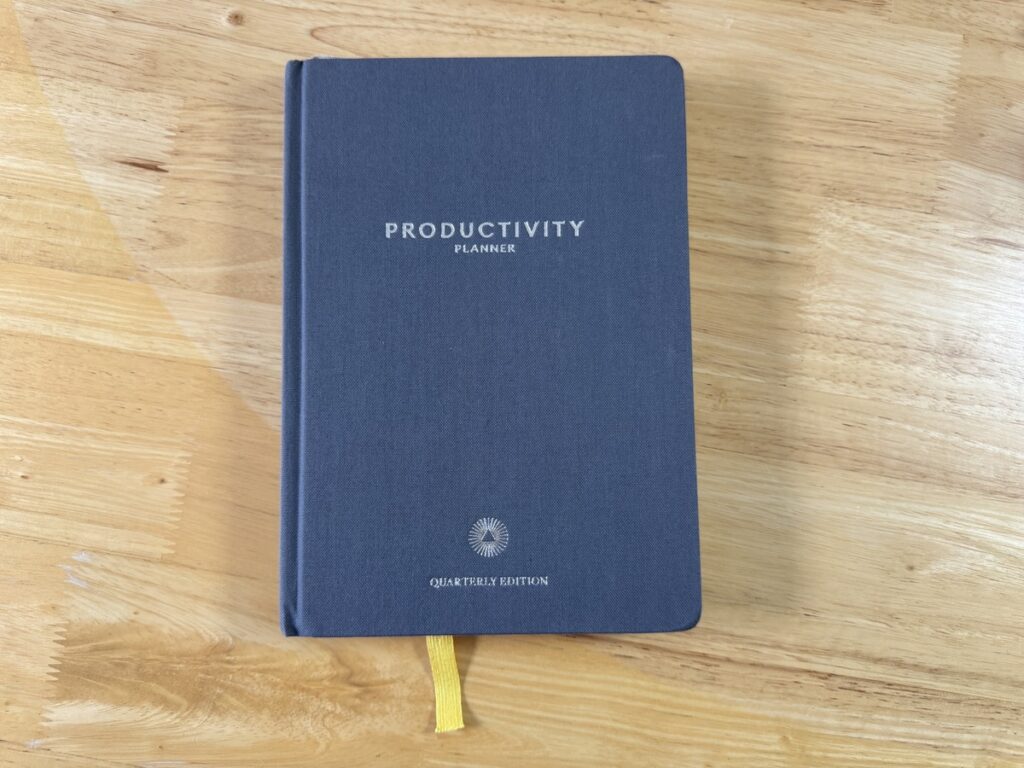
Intelligent Change 3-Month Productivity Planner. Gray A5
An A5 undated 3-month planner with a built-in productivity framework, daily time-blocking, habit and mood trackers, and so much more. Linen hardcover, recycled paper, and a 6-month money-back guarantee.
Intelligent Change Productivity Planner specs at a glance
| Spec | Detail |
|---|---|
| Size | A5, 5.7 x 8.26 inches |
| Cover | Durable linen hardcover, gray |
| Duration | 3 months per planner (undated, start any time) |
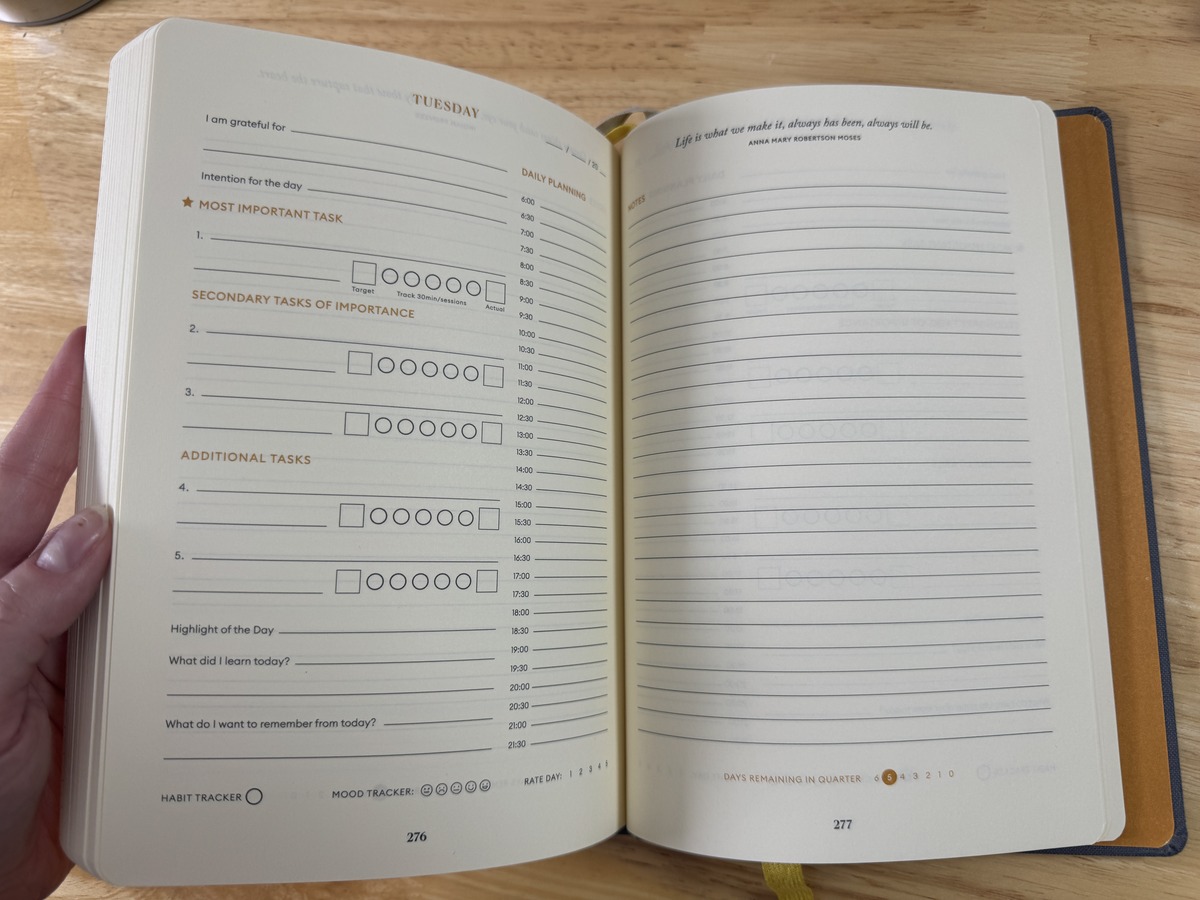
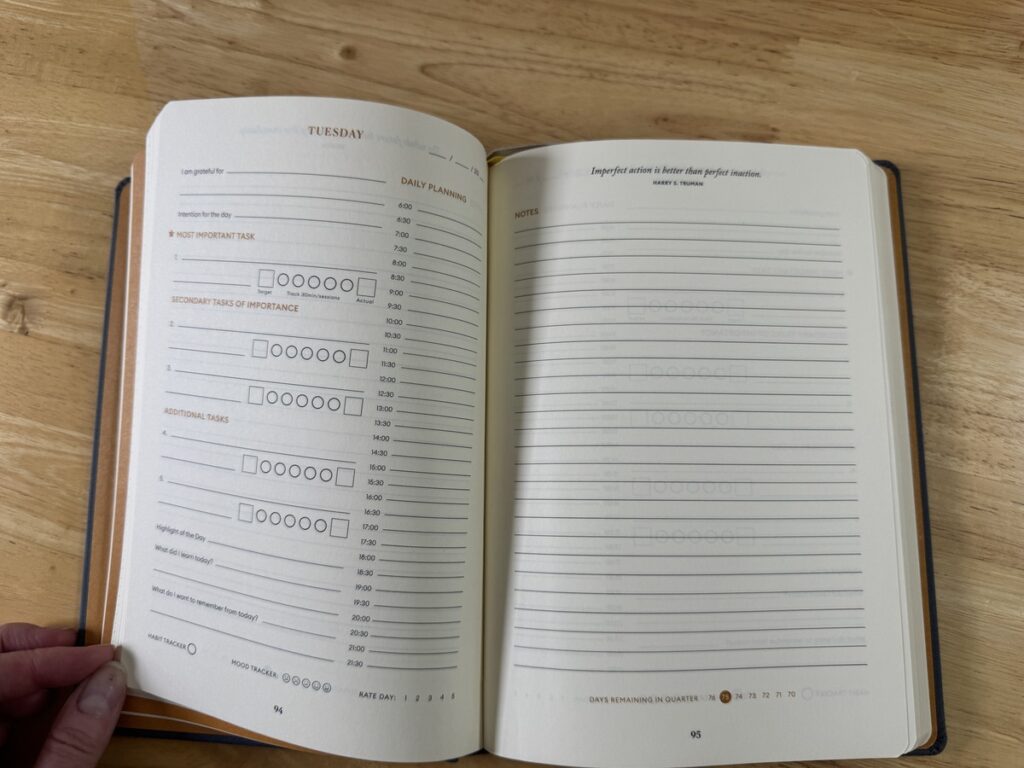
| Daily layout | Time-blocking from 6AM to 9PM, top priorities, to-do list, notes, daily productivity score |
| Trackers included | Habit tracker, mood tracker |
| Extras | To-do list sheets, dot grid pages, ribbon bookmark, motivational quotes on every page |
| Materials | FSC-certified recycled paper, 100% plastic-free and compostable construction |
| Colors available | Gray, Black |
Who is this planner best for?
If you are a business owner, entrepreneur, or anyone juggling a lot of competing priorities, the quarterly rocks system alone earns its keep. It forces you to name your big goals before the small tasks pile up and swallow your week. If the problem is that you have too many ideas and no way to rank them, I wrote about sorting ideas into seeds over on my other blog, and the planner gives that thinking a place to live.
It also works well as a gift. Graduation, promotion, new business launch. The hardcover and quality pages feel premium enough to wrap and give, and the content inside is genuinely useful rather than decorative.
What happened when I actually sat down with it
I opened it expecting to flip through and set it aside. Instead I spent time reading the framework section, which I was not expecting. The rocks, pebbles, and sand concept is not new, but having it spelled out inside the planner with space to apply it directly made it click in a way it had not before.
The size is exactly right for a bag or tote without taking over your whole desk. The hardcover held up without warping. And the ribbon bookmark is a small thing that I immediately appreciated because I always lose my place.
Three things that actually stood out
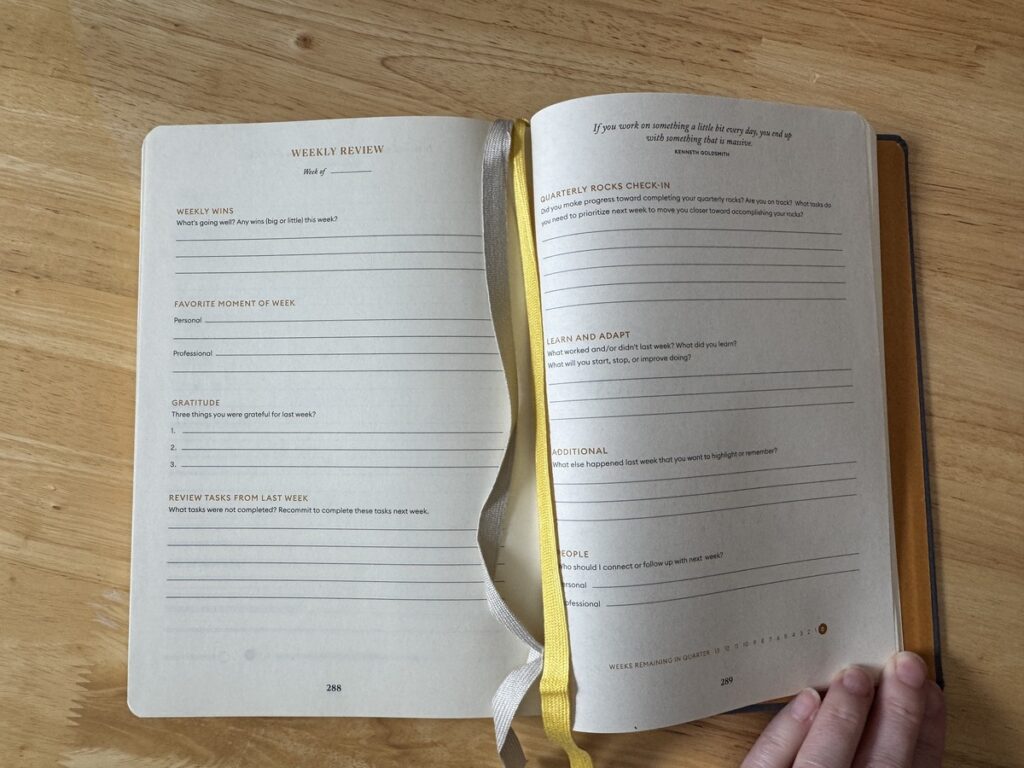
- Quarterly rocks framework: Before you touch the daily pages, the planner walks you through a prioritization system built around naming your biggest goals for the quarter. That context changes how you approach every single week.
- Focus Time technique: Built around focused 30-minute work sessions with mindful breaks, similar to the Pomodoro method but explained in plain language inside the planner itself. No outside research required.
- Daily productivity score: At the end of each day you rate yourself. It sounds simple but it creates a feedback loop. A few low-score days in a row tells you something is off before the week gets away from you. Paper works fine for this. If you would rather the tracking live on your phone, I built Dopamine Dealer Habits to do the same feedback loop without the pen.
If you like the idea of an end-of-day score but know you will never write it down, I have a version that fills itself in: how I track what I actually got done without logging it.
What worked
- Guided framework content is genuinely useful, not filler
- Undated format means I can start mid-year without wasted pages
- A5 size fits in a bag without being precious about it
- Hardcover is sturdy enough to write in on a lap or in a car
- Mood tracker and habit tracker cover more ground than most planners
- Dot grid pages in the back for overflow notes
- Eco-friendly materials with a 6-month money-back guarantee
What to know before you buy
- Writing space per day is tight if you mix work and personal tasks, appointments, school pickups, personal reminders compete for room with professional to-dos
- The introductory how-to pages repeat with every new planner, so long-term users will eventually find them redundant
- Three months goes fast, and buying four planners a year adds up
- The rigid daily structure can feel like a lot if your schedule is unpredictable or changes week to week
Quick answers before you add to cart
Is the Intelligent Change Productivity Planner truly undated?
Yes. There are no pre-printed months or dates anywhere in the planner. You fill in dates as you go, which means you can start on any day of any year without skipping or wasting pages.
How long does one planner last?
Three months, based on the daily page count. If you plan to use it consistently every day, budget for roughly four planners per year.
Does the Focus Time technique follow standard Pomodoro 25-minute intervals?
Not exactly. The built-in Focus Time method uses 30-minute focused work sessions rather than the standard 25 minutes. The core idea is the same: work in short, uninterrupted blocks with intentional breaks.
Will it work if I have ADHD or a very fluid schedule?
Possibly, but with caveats. The structure is fairly detailed and the daily layout is fixed. Some people with ADHD find that structure helpful as a container. Others find it overwhelming. If rigid formats have frustrated you before, this one will likely do the same.
Can this replace a full calendar for appointments and personal tasks?
Not really. The daily layout is built for prioritized work tasks, not a full appointment calendar. Time slots run 6AM to 9PM but the space is tight. I keep a separate calendar app for appointments and use the planner for the work list.
Does the paper hold up to fountain pens or felt-tip markers?
Results vary. Ballpoint and fine-tip felt pens hold up fine. Fountain pen users and broad felt-tip users have reported some bleed-through, so test your pen on the dot grid pages before committing to the daily layouts.
Other options worth considering
| Planner | How it compares |
|---|---|
| Full Focus Planner by Michael Hyatt | More quarterly goal-setting structure and longer daily writing space. A good fit if you want even more room per day and are willing to pay a higher price per planner. |
| Leuchtturm1917 Bullet Journal | If the rigid daily format feels like too much, a dot-grid bullet journal lets you build your own system. Lower cost per volume. Edition 2 includes a bullet journal pocket guide, key, index and future log, but no productivity framework, so you build the system yourself. |
| Panda Planner | Similar philosophy with daily, weekly, and monthly sections and a focus on positive psychology. Compare it if the Intelligent Change layout feels too task-heavy and you want more reflection prompts. |
| Decorably Daily Planner Pad | The one I tested before this. A tear-off pad instead of a bound book, so there is no framework section, but you get more room per day and nothing to carry around. |
Would I order another one when this runs out?
Yes. I planned to share this and kept it instead. That is the clearest signal I can give. The quality is there in the cover, the pages, and the size. More than that, the framework inside changed how I thought about planning a quarter, and I did not expect that from a planner review.
It is not for everyone. If you need appointment slots or room to mix personal and work tasks on the same page, look at something more calendar-forward. And if the real problem is that your task list is too long to rank by hand, I built an n8n workflow that sorts mine into a daily plan instead. But if you want a system that actually teaches you how to prioritize before it asks you to write anything down, this is the one.
A tool I built
Dopamine Dealer
Track your habits and get a hit of dopamine every time you check one off. No willpower required.
Start your streak →I run an affiliate program on the tools I build. Approved affiliates earn 20% on what their referrals pay, for up to a year. US only for now. See the program →
Related reviews
- Decorably Daily Planner Pad for Detailed Daily Planning
- LUKETURE Clamp On Desk Organizer I Have Two for the Same Desk