
Affiliate Disclosure: This post contains affiliate links, which means I may earn a commission if you make a purchase through links on this site, at no extra cost to you. As an Amazon Associate I earn from qualifying purchases.
A four-day power outage will turn anyone into a prepper. That’s exactly what happened to me, and it’s why these ended up in my hands. BDH sent them over, and I went in completely blind. I’ve never tasted anything in this category before.
Yes, they’re edible, and no, you won’t be choking them down in an emergency. They taste like a mild, dried-out granola bar with a hint of cocoa. Not exactly an indulgent treat, but not a punishment either.
Quick Verdict
- Buy it if: you want a long-term emergency food option you can store for 20 years and actually eat without gagging
- Skip it if: you need a gluten-free option or expect anything close to a real chocolate snack
- My favorite feature: the 20-year shelf life with no preservatives. Vacuum packaging alone is doing that work, which means I can toss a box in my kit and not think about it again until 2045.
- Would I buy again? Yes
What Makes BDH Emergency Ration Bars Different from a Standard Energy Bar?
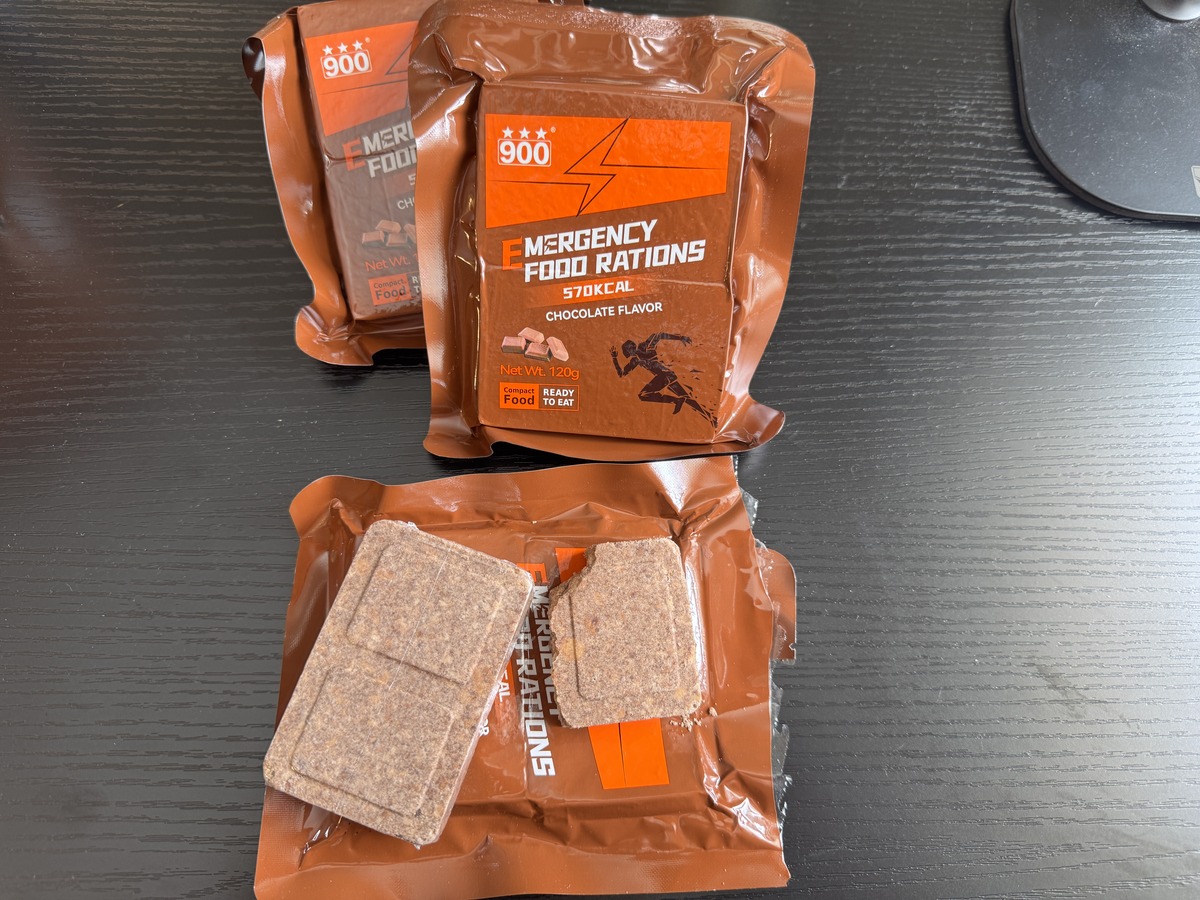
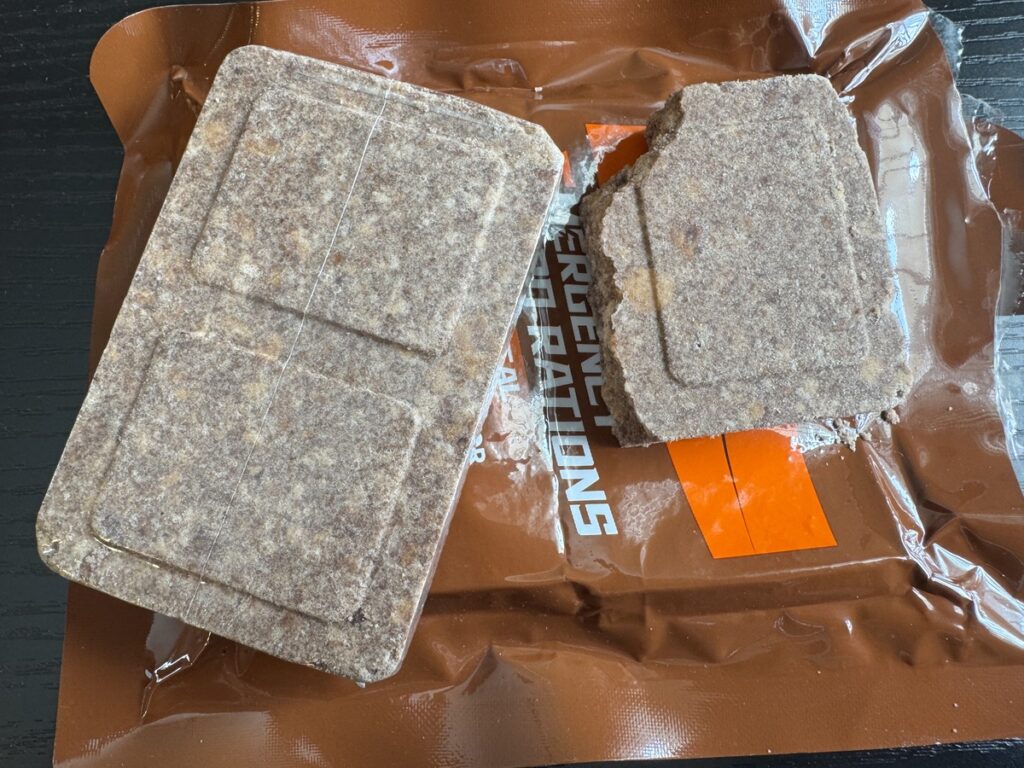
Most energy bars are built to taste good. These are built to last. The difference is obvious the second you open the package. Two compact hard-pressed bars, individually vacuum sealed, with a best-by date of June 2045. No preservatives in the ingredient list. The shelf life comes from very low moisture content and the vacuum seal itself. Once that seal is broken you have six months to finish them if you keep the inner transparent film intact, or about two months if you unwrap them completely. That detail matters for how you store the box after opening.
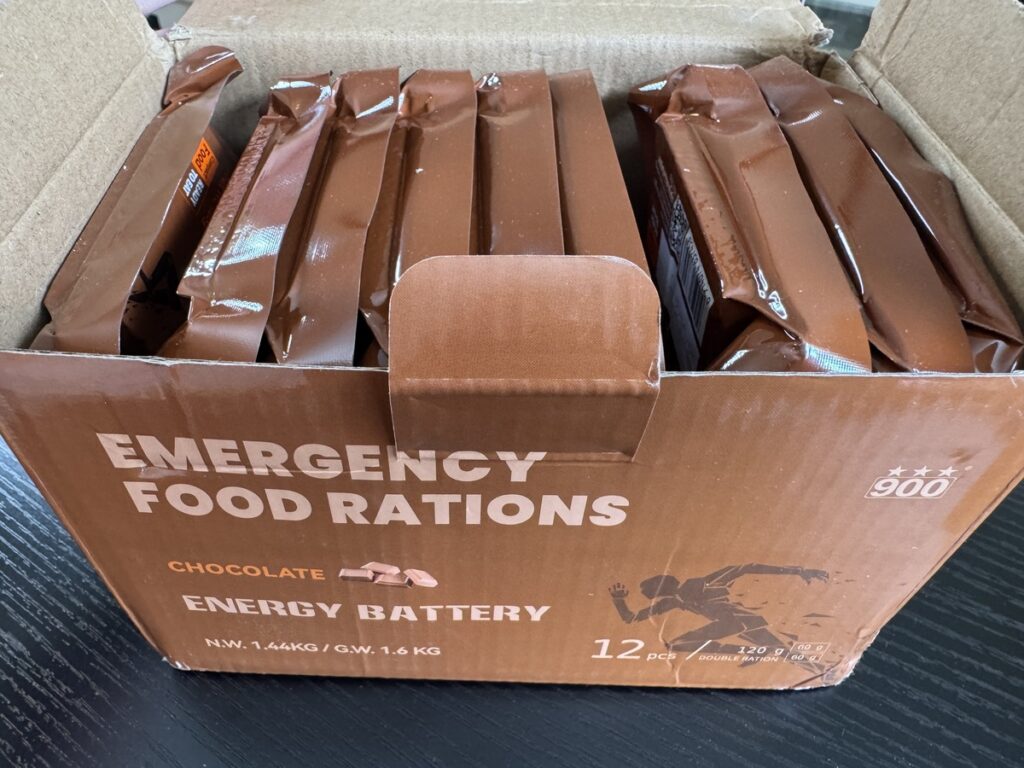
BDH Chocolate Flavor Emergency Ration Bars 12-Pack
Twelve individually sealed 120g packs, roughly 570 calories each, totaling about 6,840 calories per box. Shelf-stable for 20 years with no preservatives, no cooking, and no water required.
BDH Emergency Ration Bar Specs
- Shelf life: 20 years, vacuum sealed, cool dry storage
- Calories per pack: About 570 kcal per 120g pack
- Calories per box: About 6,840 kcal across 12 packs
- Macros per 100g: 475 kcal, 19.4g fat, 67.6g carbs, 7.1g protein, 0.238g salt
- Serving: 2 bars per pack
- Certifications: ISO, HACCP, FDA, Halal, Kosher, Vegan
- Allergens: Contains wheat and gluten, not gluten-free
- Preparation: None, open and eat
Who Should Buy Emergency Ration Bars?
These make sense if you’re building or refreshing a home emergency kit, stocking a car bag, or preparing for hurricane or earthquake season. The 20-year shelf life is the main draw. You buy a box, put it somewhere, and forget about it. They also work for hikers and backpackers who want dense lightweight calories without cooking. The Halal, Kosher, and Vegan certifications mean they cover a wider range of dietary needs than most ration options. If you have celiac disease or a serious gluten intolerance, skip these entirely. If you’re also putting together a broader emergency preparedness kit, these pair well with water storage and a basic first aid supply.
What Do BDH Ration Bars Actually Taste Like?
I opened the outer box and pulled out one vacuum-sealed pack. The seal was tight, almost stiff. Inside were two small bars wrapped again in a transparent film. They smelled surprisingly decent, like a chocolate granola bar, which I wasn’t expecting at all. The texture is hard and a little crumbly when you break them apart. Not impossible to chew, but dense. I took a small bite and the flavor was mild, a faint cocoa taste, dry, not sweet. Not bad. Not good in the way a snack is good. But if I had gone three days without eating during a disaster, I would be very happy to have these in front of me.
Features That Actually Matter for Emergency Food
- Vacuum packaging with no preservatives: The ingredient list is clean. Flour, vegetable oil, sugar, glucose syrup, cocoa powder, water, salt, sodium bicarbonate. Nothing artificial. The shelf life is all packaging, not chemistry.
- No water required: In an actual emergency, water is often scarce or compromised. These require zero prep. Open the pack and eat. That sounds simple but it’s a real advantage over rations that need rehydration.
- Individually sealed portions: Each pack is its own unit. Easy to grab one for a bag, share during an evacuation, or ration across multiple days without exposing the rest of the box.
- Calorie density per ounce: At roughly 570 calories per 120g pack these are pulling serious weight for their size. Three packs per person per day covers basic caloric needs for a standard 72-hour emergency kit.
Pros
- 20-year shelf life is legitimately impressive and stress-free to store
- No preservatives in the ingredients
- Mild but not offensive taste, more granola bar than cardboard
- No prep, no water, no cooking required
- High calorie density for the size and weight
- Halal, Kosher, and Vegan certified
- Individually sealed packs make portioning and sharing easy
Cons
- Very dry and dense, have water nearby when eating
- Flavor is subtle, if you want rich chocolate this isn’t it
- Not gluten-free, contains wheat
- Once the vacuum seal is open, shelf life drops to six months maximum
Common Questions About BDH Emergency Ration Bars
Do they really last 20 years without preservatives?
Yes, when stored in a cool dry place. The shelf life comes from vacuum packaging and very low moisture content, not preservatives. Heat and humidity shorten that window, so avoid storing them in a hot garage or car long-term.
How many packs do I need for a 72-hour kit?
At roughly 570 calories per pack, three packs per day per person covers basic caloric needs. One 12-pack box covers one adult for just over three days.
What happens after I open the box?
Each bar is individually vacuum sealed so opening the box doesn’t affect the others. Once you break the seal on an individual pack, use it within six months with the inner film on or within two months if fully unwrapped.
Are these safe for kids in an emergency?
The ingredients are simple with no artificial preservatives. The texture is hard and dry so younger children may need smaller pieces and water alongside. No allergens beyond wheat are listed.
Can these be stored in a car or hot garage?
Avoid sustained heat. High temperatures degrade the packaging and shorten the shelf life well below the stated 20 years. A cool dry indoor location like a closet or pantry is ideal.
How Does BDH Compare to Other Ration Bars?
| Option | Shelf life | Format | Flavor and note |
|---|---|---|---|
| BDH | 20 years | Vacuum-sealed compressed bars | Mild cocoa, no preservatives |
| Mayday Food Bars | 5 years | Compressed bar | US-made, easier to find locally |
| Datrex | 5 years | Compressed bar | Coconut, good for rotation variety |
- Mayday Food Bars: A US-made option with a five-year shelf life and a similar compressed bar format. Shorter shelf life than BDH but easier to find locally if you want to inspect before buying.
- Datrex Emergency Food Ration Bars: Five-year shelf life with a coconut flavor. A decent pairing alongside a longer-shelf option if you want variety in your emergency kit or prefer a shorter rotation cycle.
My Take After Actually Eating One
I went in expecting the worst and came out genuinely relieved. These aren’t a snack and they aren’t trying to be. But they taste fine, they store for 20 years without preservatives, and they require absolutely nothing to eat. For someone who just lived through four days without power and realized they were completely unprepared, that combination is exactly what I needed to have on hand. I wouldn’t hesitate to grab a box.
Where To Buy
A tool I built
Energy Battery
Log your energy through the day and watch your battery fill, so you can see what actually charges you and what drains you.
Find your spark →I run an affiliate program on the tools I build. Approved affiliates earn 20% on what their referrals pay, for up to a year. US only for now. See the program →