
Affiliate Disclosure: This post contains affiliate links, which means I may earn a commission if you make a purchase through links on this site, at no extra cost to you. As an Amazon Associate I earn from qualifying purchases.
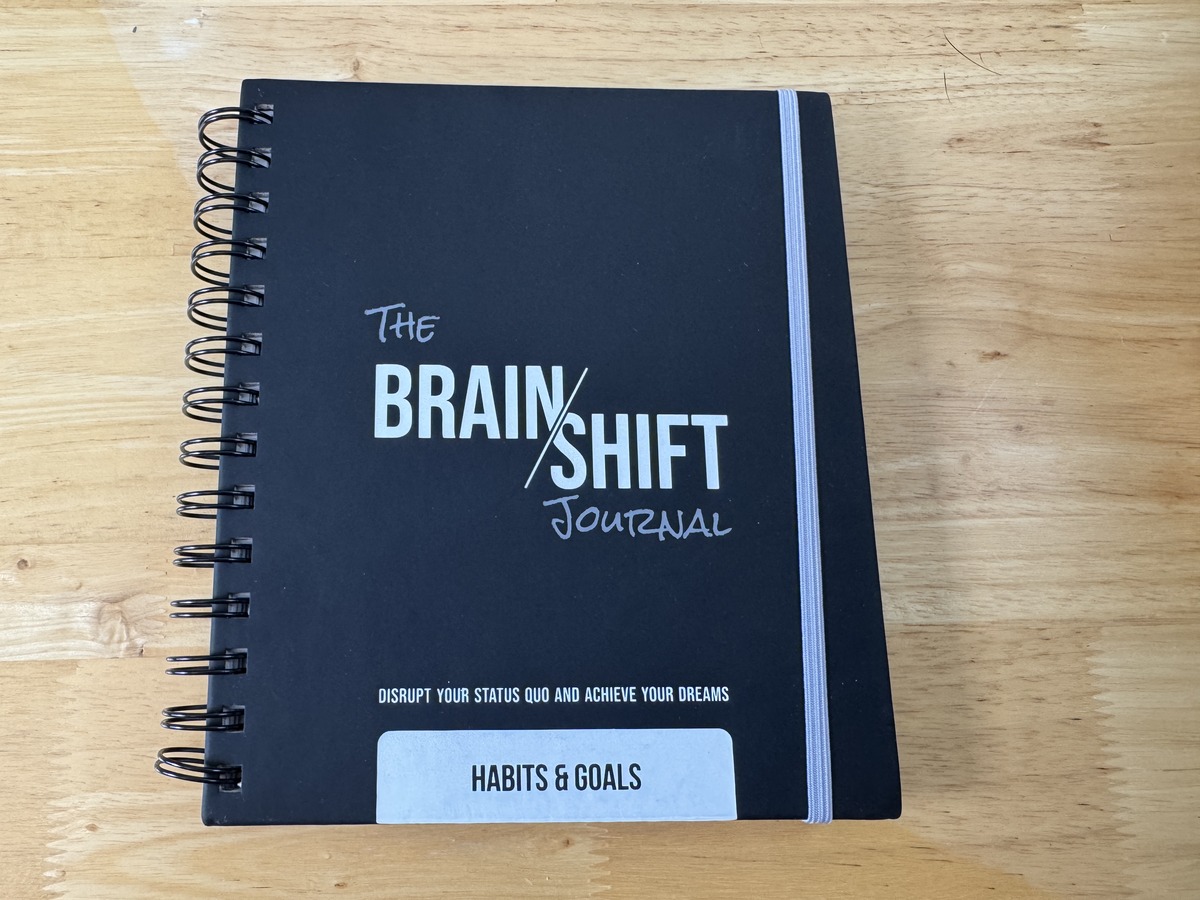
The Brain Shift Journal is a 13-week undated guided journal with a different prompt every day instead of the same three-line gratitude template. Each week opens with a behavioral science concept and the daily questions build on it. It is a strong fit if a blank page stops you cold, and a poor one if you want a full year covered in one book.
This was sent to me to try. I opened it expecting a journal and got something closer to a guide. Clean, sharp, and structured in a way that tells you exactly what to do instead of handing you a blank page and wishing you luck. Plenty of journals promise to transform your mindset and most of them are forgotten by February. This one is built differently.
Quick Verdict
- Buy it if: you want a structured science-backed system that tells you exactly what to do each day for 13 weeks without repeating itself
- Skip it if: you prefer free-form journaling with minimal structure, or you want a full year covered in one purchase
- My favorite feature: the prompts genuinely evolve every single day. I kept waiting for the what are you grateful for loop to start and it never did.
- Would I buy again? Yes
How Is This Different From a Gratitude Journal?
It changes the question every day, and it teaches while it guides. A gratitude journal hands you the same template 90 times. Write three things you are grateful for, set your intention, rate your day, done. Each week opens with a behavioral science concept rooted in goal theory and habit formation research, and then the daily prompts connect back to that concept. The keystone goal framework is the part that surprised me most. It asks what stepping stones would make this goal more manageable, what you will need to give up, and what key actions are required over the next 13 weeks. Those are not soft journaling questions. They are accountability questions.
Behavior Shift Brain Shift Journal Habits and Goals
A 13-week undated productivity journal with daily prompts rooted in behavioral science, lay-flat spiral binding, and a hardcover vegan leather finish. Compact enough to take anywhere.
Brain Shift Journal Specs
- Size: 6 x 7 inches
- Duration: 13 weeks, undated so you can start anytime
- Binding: Wire-O spiral with lay-flat design
- Cover: Hardcover with vegan leather soft-touch finish
- Daily time commitment: 5 to 10 minutes
- Closure: Elastic band that doubles as a bookmark
- Paper quality: Thick and durable, does not feel flimsy
- Environmental note: Print partner donates 10,000 trees annually to Trees for the Future
Who Is the Brain Shift Journal Actually For?
This is a strong fit if you have tried a basic planner or gratitude journal and found it too shallow to stick with. If you want to understand why you are building a habit rather than just tracking whether you did it, the weekly behavioral science concepts are genuinely useful. Professionals working on focus and productivity, people breaking old routines, and anyone mid-year who needs a reset will get real mileage out of the structure. It is not the right fit if you find structured systems stifling. If your ideal journaling session is a blank page and no agenda, this will feel like homework. If you already use a daily planner pad or a habit tracker, this works alongside those rather than replacing them.
What I Noticed Flipping Through All 13 Weeks
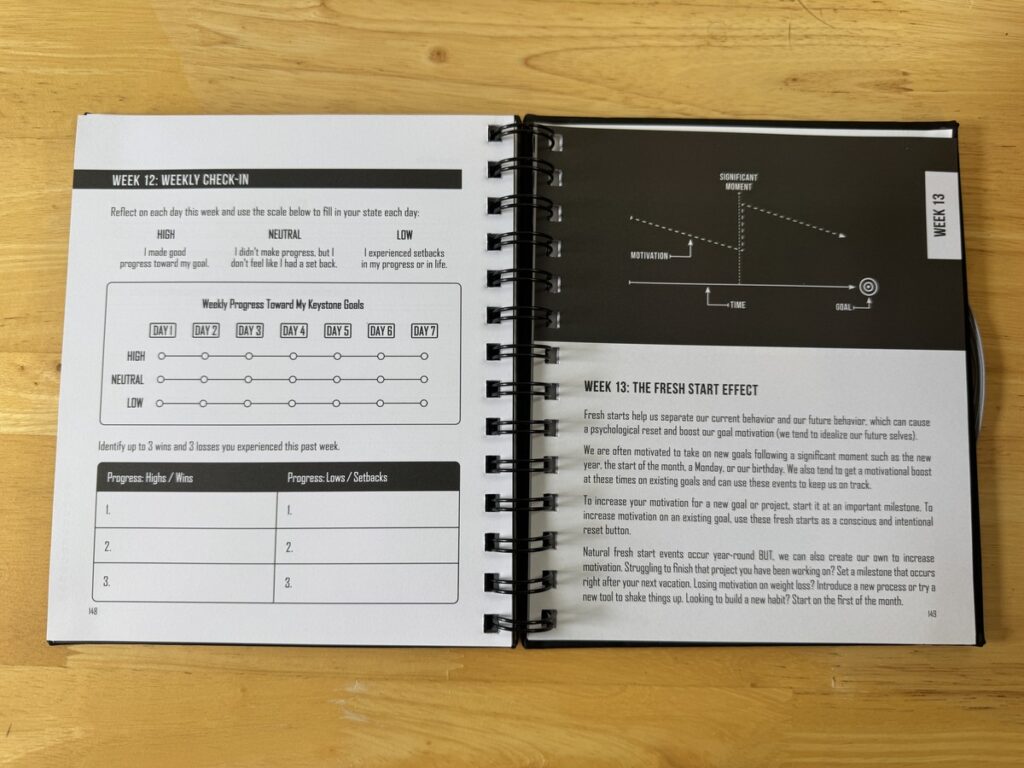
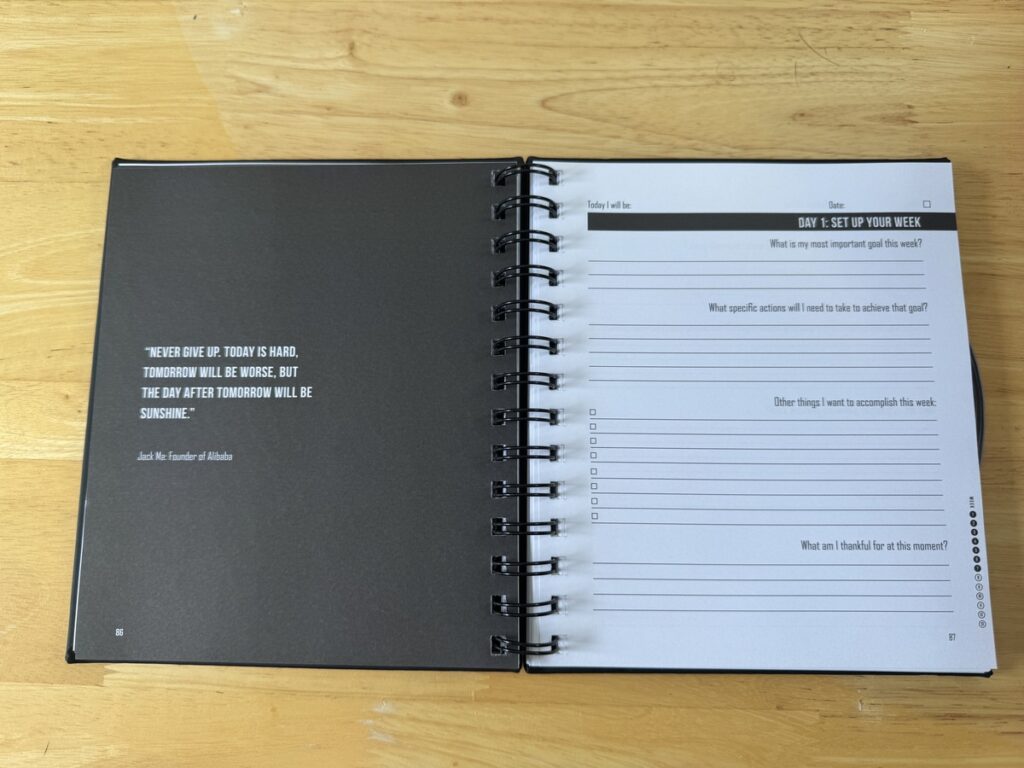
The physical quality stood out right away. The hardcover has a soft almost rubbery feel, the spiral lays completely flat on a desk, and the pages have real weight to them. Nothing about it feels cheap. Working through the prompts, what kept striking me was how much the questions varied. One day asks about a keystone goal and what you need to give up to reach it. Another uses a thought starter like what would my life look like if this person had never been part of it. Those are not throwaway prompts. There are also motivational quotes tucked into the middle pages, QR codes linking to a related book and podcast, and a clean week indicator running down the side of each spread so you always know where you are.
Which Features Actually Mattered?
- Lay-flat spiral binding: Sounds small but writing in a journal that flops shut or curls up is genuinely annoying. The wire-O binding keeps every page flat with no hand pressure needed.
- Undated format: No guilt built in. Miss a week and pick it back up without a single blank date staring at you. You start whenever you are ready.
- Weekly behavioral science insight: Each week opens with a concept from goal theory or habit research. A short read that reframes the prompts that follow and makes the whole thing feel grounded rather than generic.
- Weekly check-in structure: Tracks progress, highs and wins, lows and setbacks with a visual indicator. It forces a real review of the week, not just a feeling, and that accountability piece is what most journals skip.
Pros
- Prompts change every single day with no repetitive fill-in-the-blank loops
- Compact enough for a bag but with enough page space to write comfortably
- The 10-step guide at the front makes the system make sense before you start
- Elastic band closure works as a bookmark and keeps it from flopping open in a bag
- High-quality pages that feel durable, not like they would bleed or tear
- Trees for the Future partnership is a small but genuine touch
Cons
- Covers only 13 weeks so a full year requires buying additional volumes
- The introductory pages before the prompts begin are thorough but can feel like a slow start
- The structured format may feel too rigid if you prefer freeform journaling
Common Questions About the Brain Shift Journal
Is it dated or undated?
Completely undated so you can start on any day of the year. No pre-filled months or dates to skip past if you fall behind.
How much time does it take each day?
5 to 10 minutes per session. The prompts are specific enough that you are not staring at the page wondering what to write, which keeps sessions short and consistent.
What if I miss a few days or a whole week?
You pick up where you left off. The undated format means no visual record of what you skipped and no built-in guilt to derail you.
How is this different from a basic gratitude journal?
A gratitude journal typically repeats the same three-things format daily. This opens each week with a behavioral science concept and uses prompts that build on it, so the focus shifts week to week. Closer to a coaching system than a gratitude log.
Is it beginner-friendly?
Yes, and it may be better for beginners than experienced journalers. The 10-step guide explains exactly how to use it and the prompts remove the blank page paralysis entirely.
Does it work for professional goals?
The keystone goal framework is goal-agnostic so it works for career, health, financial, or any combination. You define the goal and the structure holds you to it.
How It Compares to Other Guided Journals
| Journal | Best for | How it compares |
|---|---|---|
| The Five Minute Journal | A faster daily habit | 5 minutes a day, split between morning and evening. The prompt set repeats daily by design, and there is no 13-week goal framework. |
| Full Focus Planner | Managing projects and schedules alongside goals | Quarterly goal setting with a Daily Big 3 task framework plus weekly and quarterly reviews. More schedule and task management, less daily prompting. |
| Monk Manual | Daily intention and reflection | 90 days at 8.5 x 5.5 inches, with a full-page spread for every day, week and month. Reflection prompts rather than a weekly taught concept. |
Is the Brain Shift Journal Any Good?
Yes, for a 13-week sprint on one specific goal. The thing that kills most journaling habits is the blank page problem. You sit down, you do not know what to write, you close the cover and tell yourself you will do it tomorrow. This removes that entirely. Each session has a clear direction and the prompts are interesting enough that you actually want to see what comes next. The 13-week limit is the real catch if you want a full-year solution in one purchase, but as a focused sprint for building habits and making real progress on a specific goal, it delivers.
Where To Buy
A book I made
The Lightest One
An undated ADHD daily book that never asks you to prioritize. Dump everything in your head, mark each thing light, medium or heavy, and do the lightest one.
Get the paperback →I run an affiliate program on the tools I build. Approved affiliates earn 20% on what their referrals pay, for up to a year. US only for now. See the program →